A Sweet Solution to Human-Wildlife Conflict
In Tanzania’s Selous-Niassa Wildlife Corridor, where elephants roam freely across farmland, farmers like Imelda have long battled a frustrating reality; One night is all it takes to lose an entire season’s harvest. Imagine spending months tending to your crops, only to wake up and find them flattened under the massive footprints of an elephant. For years, this was Imelda’s life.
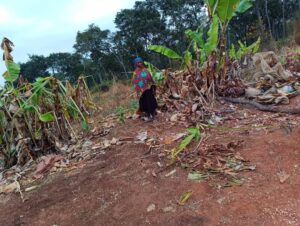 She recalls one evening vividly: “I had just checked on my maize field. Everything looked perfect. By morning, nothing was left just broken stalks and deep tracks leading back into the forest. I cried that day. I thought, ‘What’s the point of farming if I keep losing everything?’”
But Imelda didn’t give up. She adapted.
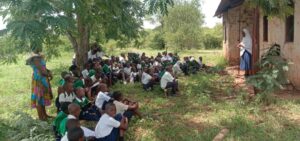 At a community workshop on human-elephant conflict mitigation, she heard something surprising: elephants don’t like passion fruits. Unlike maize or cassava, which elephants eagerly consume, passion fruit vines are less appealing. The idea intrigued her. Could switching crops protect her from the heartbreak of another lost harvest?
With newfound hope, Imelda planted her first passion fruit vines. It wasn’t easy, passion fruit farming was unfamiliar, and she had to use skills she gained from the training to secure harvests. As months passed, something incredible happened. Her vines flourished. Elephants ignored her farm.
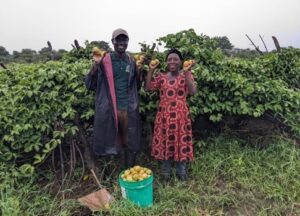 Soon, she was harvesting baskets full of golden fruit, selling them in local markets, and earning what she could have lost from elephants. Security replaced fear.
Today, Imelda is a local champion of climate-smart, elephant-resistant farming. She teaches others in her community how passion fruit and alternative crops like sesame and chili can coexist with wildlife while providing stable incomes.
“I never thought I would smile about farming again,” she says, holding a basket of fresh fruit. “Now, I see a future where we don’t have to fight elephants, we can grow crops they don’t want. We can live with them, not against them.”
Imelda’s story embodies the essence of resilience and adaptation, showing that solutions to human-wildlife conflict are about adapting. Sometimes something as simple as a fruit vine and a shift in mindset can make a world of difference.
The human who live alongside wildlife are the ones who will ultimately decide their fate. That is why IEF believes in supporting projects that build a community consensus for conservation. By investing in people, we can change the lives of elephants for the better.

Close Encounters of the Endangered Kind
Episode 12: Undercover Operatives and Investigations
By Tricia Berry
 Our next stop was Murchison Falls National Park (MFNP) to meet with IEF’s partner and our host in Uganda Mike Keigwin, founder of the nonprofit Uganda Conservation Foundation. The 6-hour drive allowed us to see the countryside and towns along the way. This day we saw an unprecedented line of hundreds, maybe thousands, of people walking towards Kampala, the sister city to Entebbe and the capital of Uganda. They were heading to a shrine in Namugongo, 10 miles from central Kampala, to celebrate Martyrs Day Uganda, which has taken place on June 3 every year since 1975. It commemorates 45 Christian martyrs who were executed for their faith in the 1880’s.
At the security checkpoint at the entrance into MFNP, which is about the size of our state of Delaware, we were greeted by many baboons looking for food handouts…CONTINUE READING
Conservation Chats
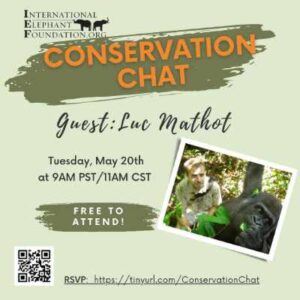 One of our favorite programs is our monthly Conservation Chat. Now in its fourth year, each month we bring a conservation leader or expert direct to you via Zoom. They talk about their work, share insights, and answer questions. Even though you might not be able to fly across the globe to meet these incredible people in person, IEF’s Conservation Chats give you a way to connect with their work from the comfort of your home.
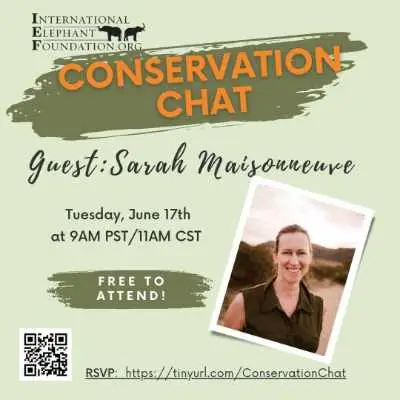
We have three incredible talks coming up! On May 20th Luc Mathot of Conservation Justice will join us and talk about security challenges facing forest elephants. Wildlife Connection’s Sarah Maisonneuve will be our guest on June 24th, discussing the important coexistence and community programs in Ruaha, Tanzania. On July 22nd, Mount Kenya Trust’s Director Susie Weeks will talk about the Mount Kenya Horse Patrol Team, and so much more! You do not want to miss these extraordinary guests! RSVP here.

Upcoming IEF Events
- May 20, 2025: Conservation Chat with Luc Mathot, 9am PST
- June 17, 2025: Conservation Chat with Sarah Maisonneuve, 9am PDT
- July 1, 2025: Deadline to submit abstracts for the 21st International Elephant Conservation & Research Symposium
- July 22. 2025: Conservation Chat with Susie Weeks, 9am PDT
- August 1, 2025: Deadline to submit Grant Applications for 2026 funding cycle
- November 2-13, 2025: Travel to Kenya with IEF & Classic Escapes
- December 5-8, 2025:21st International Elephant Conservation & Research Symposium